Complete Restaurant Kitchen Cleaning Checklist
Running a restaurant takes more than good food on the plate. Behind every great meal is a kitchen that's actually clean, not just tidy on the surface, but properly cared for. It keeps your staff safe, protects your name in the community, and honestly, it's one of the easiest ways to grow your business without spending a fortune on marketing.
The tricky part? Most owners are so busy keeping the daily operation running that deep cleaning falls to the bottom of the list. That's exactly why a lot of restaurants in the city end up bringing in a professional Restaurant Cleaning Service in London. It's not about admitting you can't handle it yourself; it's about freeing up your team to do what they do best: cook and serve.
Why Kitchen Cleaning Matters More Than People Realise
Think about what happens in a kitchen on a normal Friday night. Grease splatters everywhere, food scraps pile up, steam and dust settle into corners nobody's looking at. Even a staff that wipes down every surface at closing time is going to miss things, it's just the nature of a fast-paced environment.
Cleaning, Sanitising, and Disinfecting Are Not the Same Task
Many restaurant owners use these words as if they mean the same thing. They do not. Each step has a different purpose, and all three are important for maintaining a safe commercial kitchen.
| Task | What It Does | When To Use It |
|---|---|---|
| Cleaning | Gets rid of food scraps, grease, dirt, and any visible mess sitting on a surface. | Before every prep shift starts, and again once cooking's finished. |
| Sanitising | Brings bacteria down to a safe level, using products that are approved for food contact. | Right after cleaning anything that food touches, counters, chopping boards, and utensils. |
| Disinfecting | Kills off harmful viruses and bacteria on surfaces that don't come into contact with food. | Door handles, bins, toilets, staff areas, and anywhere hands land a lot. |
What Should be Included in Daily Cleaning
Daily cleaning is your first line of defence, skip it, and everything else gets harder. Before the doors close each night, your team should be working through:
- Wiping down prep tables with a proper food-safe disinfectant
- Cleaning the stovetops, grills, and fryers
- Scraping grease off cooking surfaces
- Washing cutting boards and utensils
- Emptying bins and swapping in fresh liners
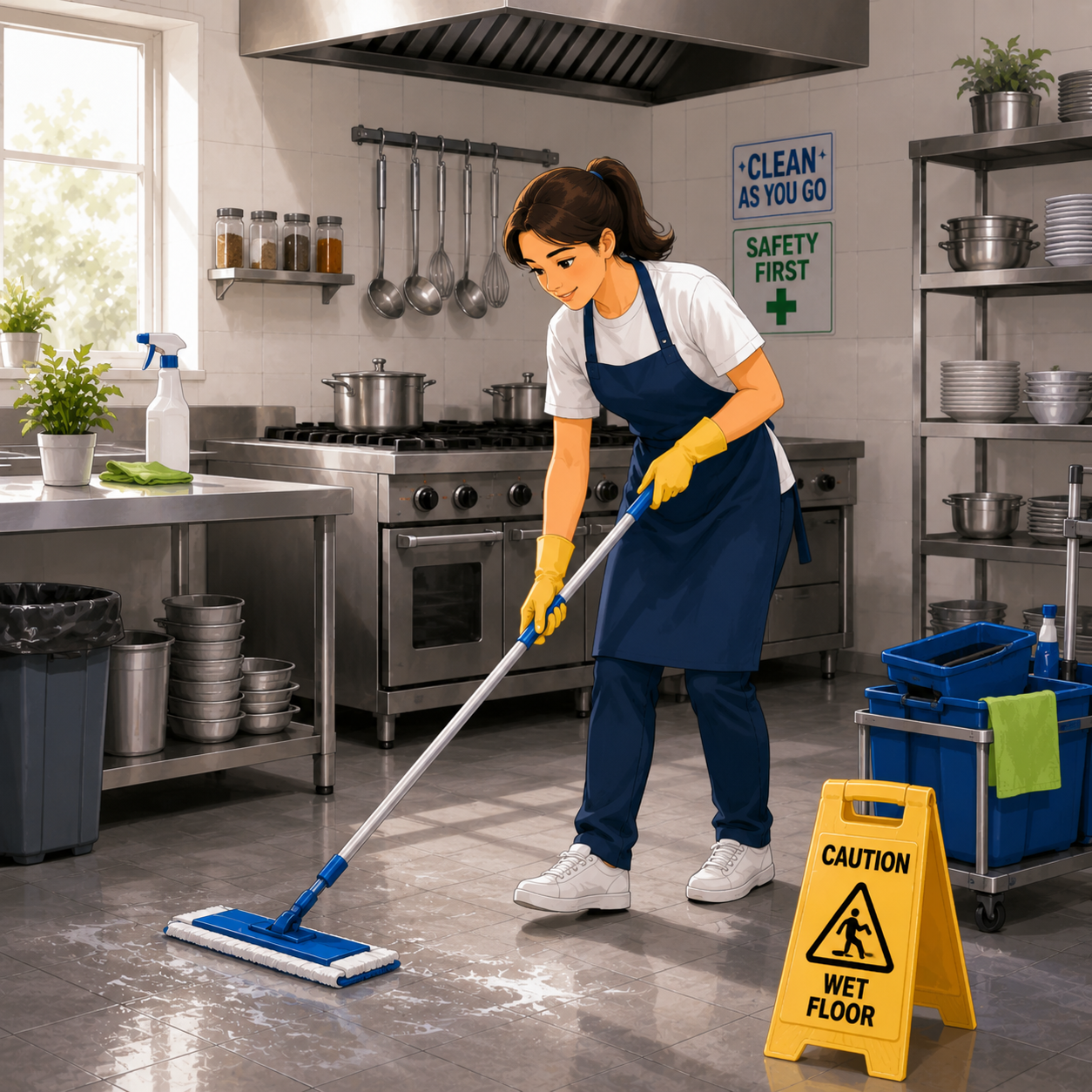
- Sweeping and mopping the floors
- Cleaning sinks and taps
- Sanitising door handles, light switches, and anything else hands touch constantly
- Storing food properly and checking that temperatures are where they should be
None of this is glamorous work, but it's what keeps bacteria levels down and your kitchen genuinely safe to work in.
The Weekly Cleaning Tasks People Tend to Forget
Some jobs simply can't be squeezed into a daily routine, they need a dedicated slot once a week. That includes:
- Deep cleaning the ovens
- Washing the extractor filters
- Scrubbing grease off the walls
- Cleaning out fridge and freezer shelves
- Checking drains for early signs of blockages
- Washing down storage racks
- Dusting ventilation areas
Stay on top of these weekly, and dirt never gets the chance to harden into something that takes twice as long to remove.
What Monthly Deep Cleaning Should Include
Once a month, it's worth stepping back and giving the kitchen a proper overhaul. This is where food safety standards really get put to the test:
- Deep cleaning the entire extraction system
- Checking hidden corners for mould
- Deep cleaning cold storage units
- Looking for any signs of pest activity
- Inspecting floor drains properly
Most restaurants don't attempt this stage on their own. It calls for specialised equipment and cleaners who know exactly what they're looking for, which is why so many turn to a restaurant cleaning service in London to handle it properly.
Follow the Restaurant Kitchen Cleaning Schedule
| Area | Daily | Weekly | Monthly | Check |
|---|---|---|---|---|
| Prep Tables | Clean and sanitise | Deep clean corners | Check for damage | No stains or food residue |
| Cooking Equipment | Wipe grease and spills | Deep clean removable parts | Clean behind the equipment | No grease buildup |
| Floors and Drains | Sweep and mop | Deep clean drains | Check for blockages | Clean and odour-free |
| Refrigerator | Wipe shelves and handles | Clean shelves | Deep clean inside | Fresh and organised |
| Bins | Empty and clean | Disinfect bins | Deep clean the waste area | No bad smell |
Better Hygiene Protects Your Staff and Your Customers
Everything about food safety starts with cleanliness. A properly cleaned kitchen cuts down on the bacteria responsible for food poisoning, and it makes for a healthier place for your team to spend their shifts.
The payoff shows up in a few clear ways:
- Less risk of cross-contamination
- Stronger results during inspections
- Customers who trust you more
- A genuinely healthier workplace
When your kitchen is clean, you're protecting everyone who walks through the door — staff and diners alike.
When Should You Call in the Professionals?
Daily cleaning gets you most of the way there, but it has limits. It just can't reach what a proper deep clean does. Professional cleaners get into the corners your staff never has time for during a shift, and they come armed with commercial-grade gear and products built to break down heavy grease and bacteria that regular cleaning products won't touch.
If your restaurant is busy most days or keeps long hours, it's worth booking a professional restaurant cleaning service in London every few weeks. It's one of the more reliable ways to keep your hygiene standards up and stay on the right side of food safety compliance.
Final Thoughts
A clean kitchen isn't just something to tick off a list. It's one of the better investments you can make in your restaurant. It protects how customers see you, keeps your team safe, saves you from costs you didn't see coming, and lets everyone do their job properly. Build a routine around daily, weekly, and monthly cleaning, or hire NeatNest Cleaners for professional cleaning, and you're setting your kitchen and your business up to last. You can also call 7360824413 to book your slot.
Frequently Asked Questions
How often should a restaurant kitchen get a deep clean?
Monthly works for most places. If you're running a busy kitchen, you might need it more often than that.
Does daily cleaning cover what a professional deep clean does?
Not quite. Daily cleaning takes care of the surface mess. A deep clean goes after the grease and bacteria hiding in places you can't easily get to.
What spots do people usually miss?
Extractor systems, ventilation ducts, areas behind heavy equipment, ceiling corners, and floor drains, these get overlooked more often than you'd think.
Does a cleaner kitchen mean better food?
It does. When there's less contamination floating around, customers end up with food that tastes fresher and is genuinely safer to eat.
How does cleaning help equipment last longer?
Grease and grime wear appliances down if you let them sit. Stay ahead of it and your equipment simply has less to fight against, so it keeps running well for longer.